

Published on 8 Mar 2026
What Is the Skin Barrier and How Does It Become Damaged?
Fact checked
The skin is much more than a protective covering—it serves as the body's first line of defense against environmental aggressors. One of the most important components of this defense system is the skin barrier. In recent years, dermatologists and skincare experts have increasingly emphasized the importance of maintaining a healthy skin barrier, as many common skin concerns—including dryness, sensitivity, irritation, and acne—can be linked to a compromised barrier.
What Is the Skin Barrier?
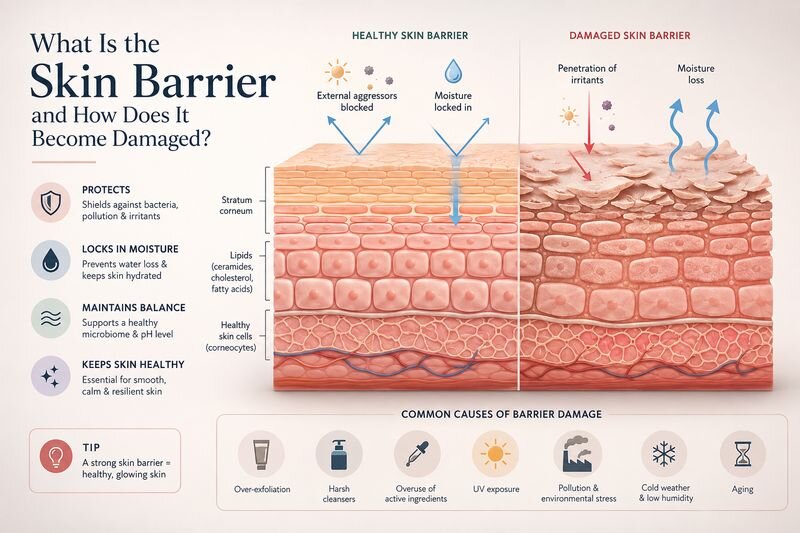
The skin barrier is primarily located within the outermost layer of the skin, known as the stratum corneum. This layer consists of dead skin cells called corneocytes, which are held together by a matrix of lipids, including ceramides, cholesterol, and fatty acids.
Dermatologists often describe this structure using the “brick and mortar” analogy. The skin cells act as the bricks, while the surrounding lipids function as the mortar that holds everything together. When this structure remains intact, the skin can effectively retain moisture and protect itself from external irritants.
Key Functions of the Skin Barrier
A healthy skin barrier performs several essential functions:
- Prevents excessive water loss from the skin
- Protects against bacteria, viruses, and environmental pollutants
- Reduces the penetration of irritants and allergens
- Helps maintain a balanced skin microbiome
- Supports smooth, resilient, and healthy-looking skin
Because of these functions, the skin barrier plays a crucial role in overall skin health and appearance.
What Causes Skin Barrier Damage?
Over-Exfoliation
Excessive use of exfoliating acids such as AHAs and BHAs, as well as frequent physical scrubbing, can weaken the skin's protective layer. While exfoliation offers many benefits when used correctly, overdoing it is one of the most common causes of skin barrier damage.
Harsh Cleansers
Some cleansers contain strong surfactants that strip away the skin’s natural oils. Over time, this can impair the skin’s ability to retain moisture, leading to dryness, tightness, and increased sensitivity.
Improper Use of Active Ingredients
Combining multiple active ingredients such as retinol, vitamin C, exfoliating acids, and benzoyl peroxide without proper guidance may overwhelm the skin and compromise barrier function.
Environmental Stressors
Prolonged exposure to UV radiation, pollution, extreme temperatures, wind, and low humidity can gradually weaken the skin barrier and trigger irritation.
Aging
As we age, the skin naturally produces fewer ceramides and protective lipids. This decline can make the skin more vulnerable to dryness and barrier dysfunction.
Signs of a Damaged Skin Barrier
When the skin barrier becomes compromised, several symptoms may appear:
- Persistent dryness and tightness
- Redness and inflammation
- Flaking or peeling skin
- Increased sensitivity to skincare products
- Burning, stinging, or itching sensations
- Unexpected breakouts
- Dullness and loss of radiance
Many people mistakenly assume these symptoms indicate a need for stronger treatments, when in fact the skin may simply need barrier repair and recovery.
How to Repair a Damaged Skin Barrier
Use Ceramide-Rich Moisturizers
Ceramides are among the most important building blocks of the skin barrier. Moisturizers containing ceramides can help restore and strengthen the skin’s protective structure.
Reduce Potential Irritants
If signs of barrier damage appear, consider temporarily reducing the use of retinoids, exfoliating acids, and other potent active ingredients to allow the skin time to recover.
Choose a Gentle Cleanser
Opt for a mild, pH-balanced cleanser that effectively removes impurities without disrupting the skin’s natural protective layer.
Wear Sunscreen Daily
Ultraviolet radiation is a major contributor to skin barrier damage. Daily use of a broad-spectrum sunscreen can help preserve skin health and prevent further impairment.
Prioritize Hydration
Ingredients such as hyaluronic acid, glycerin, panthenol, and squalane can help attract and retain moisture while supporting barrier recovery.
Professional Treatments That May Support Skin Barrier Recovery
While a damaged skin barrier is typically treated with gentle skincare and barrier-repair ingredients, certain professional treatments may help improve skin quality and support recovery when performed at the appropriate stage. It is important to note that some procedures can temporarily disrupt the skin barrier before stimulating long-term regeneration.
LED Light Therapy
LED light therapy, particularly red light therapy, may help reduce inflammation,
accelerate skin repair, and improve overall skin resilience.
Skin Boosters
Injectable skin boosters such as Profhilo and Restylane Skinboosters are designed to improve skin hydration and elasticity, helping support barrier function and overall skin health.
Polynucleotide Therapy
Polynucleotide-based treatments, including products such as Rejuran, have gained popularity for their regenerative properties. They may promote tissue repair, reduce inflammation, and improve skin quality over time.
PRP and PRF
Platelet-Rich Plasma (PRP) and Platelet-Rich Fibrin (PRF) utilize the body's own growth factors to stimulate tissue regeneration and enhance skin healing.
Exosome Therapy
Exosome therapy is an emerging regenerative treatment that uses cell-derived signaling molecules to support cellular communication and tissue repair. Early research suggests
that exosomes may help reduce inflammation and promote skin regeneration.
Microneedling
Microneedling creates controlled micro-injuries within the skin to stimulate collagen production and tissue remodeling. It is generally recommended only after the skin barrier has recovered from active irritation or damage.
RF Microneedling
RF Microneedling combines traditional microneedling with radiofrequency energy to promote collagen production and skin tightening, improving overall skin quality.
Fractional Laser Resurfacing
Fractional lasers such as CO2 and Fraxel create microscopic treatment zones within the skin, triggering repair and regeneration processes. Although these treatments temporarily disrupt the skin barrier, they may contribute to long-term improvements in skin texture and quality.
Chemical Peels
Medium and deep chemical peels can stimulate skin renewal and improve certain skin concerns. However, they should be approached with caution in patients with an already compromised skin barrier.
Does Every Skin Type Need Barrier Care?
Absolutely. Although people with dry or sensitive skin are more likely to experience barrier-related issues, all skin types including oily and acne-prone skin—depend on a healthy skin barrier to function properly.
In fact, many skin concerns associated with irritation, dehydration, and breakouts can improve when barrier health is restored.
Final Thoughts
The skin barrier is one of the most important factors in maintaining healthy, resilient skin. It not only prevents moisture loss but also protects against environmental aggressors, pollutants, and irritants. Over exfoliation, harsh cleansers, improper use of active ingredients, environmental stressors, and aging can all contribute to barrier damage. Alongside a balanced skincare routine and barrier supportive ingredients, professional treatments such as LED therapy, skin boosters, PRP, PRF, polynucleotide therapy, exosome therapy, microneedling, and fractional laser procedures may support skin recovery when used appropriately. Maintaining a healthy skin barrier is essential for achieving comfortable, resilient, and healthy looking skin.
Frequently Asked Questions (FAQ)
Yes. Cold temperatures, low humidity, strong winds, and excessive heat can weaken the skin barrier by increasing moisture loss and disrupting the skin's natural protective function.
Heavy or irritating makeup products may increase discomfort in already compromised skin. Choosing non-comedogenic and fragrance-free products is often recommended during barrier recovery.
Recovery time varies depending on the severity of damage and individual skin conditions. Mild cases may improve within a few weeks, while more significant damage can take several months to fully recover.
A weakened skin barrier can trigger inflammation and increase skin sensitivity, which may contribute to acne flare-ups or make existing breakouts more difficult to manage


