

Published on 17 Mar 2026
Exosome Therapy vs PRP for Hair Loss: Benefits, Differences, and Results
Fact checked
Exosome Therapy vs PRP for Hair Loss: Benefits, Differences, and Results
Hair loss affects millions of people worldwide and can have a significant impact on self-confidence and quality of life. As interest in regenerative medicine continues to grow, treatments such as Platelet-Rich Plasma (PRP) and Exosome Therapy have emerged as promising options for individuals seeking non-surgical hair restoration.
While both treatments aim to stimulate hair growth and improve hair density, they differ in their source, mechanism of action, and current level of scientific evidence. Understanding these differences can help patients make more informed decisions about their treatment options.
What Is PRP for Hair Loss?
Platelet-Rich Plasma (PRP) is a regenerative treatment that uses the patient's own blood to promote hair growth. A small sample of blood is collected and processed in a centrifuge to concentrate platelets and growth factors. The resulting plasma is then injected into areas affected by hair thinning or hair loss.
Growth factors released by platelets may help stimulate dormant hair follicles, improve blood supply to the scalp, and support the natural hair growth cycle.
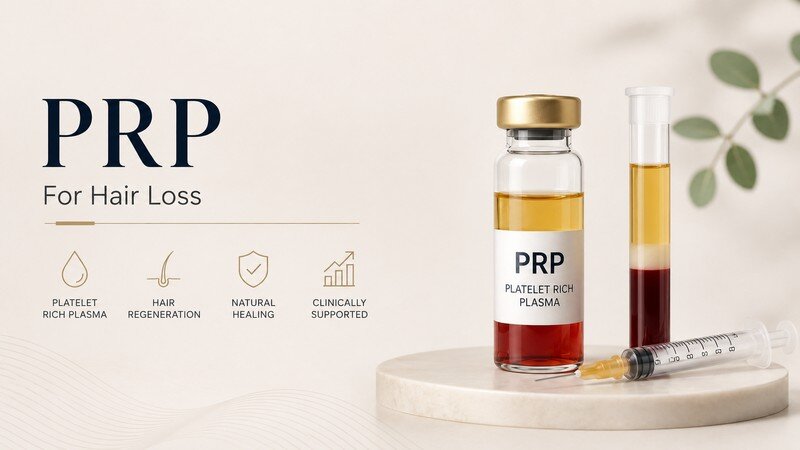
Potential Benefits of PRP
- Uses the patient's own biological material
- Minimally invasive procedure
- May improve hair density and thickness
- Can be combined with other hair restoration treatments
- Widely available in aesthetic and dermatology clinics
What Is Exosome Therapy for Hair Loss?
Exosomes are microscopic extracellular vesicles that play an important role in cell-to-cell communication. They contain proteins, growth factors, lipids, and genetic material that can influence tissue repair and regeneration.
In hair restoration, exosome therapy involves applying or injecting exosome-rich solutions into the scalp with the goal of stimulating hair follicles and supporting a healthier growth environment.
Unlike PRP, exosome therapy does not rely on the patient's own blood. Instead, exosomes are typically derived from carefully processed biological sources designed for regenerative applications.
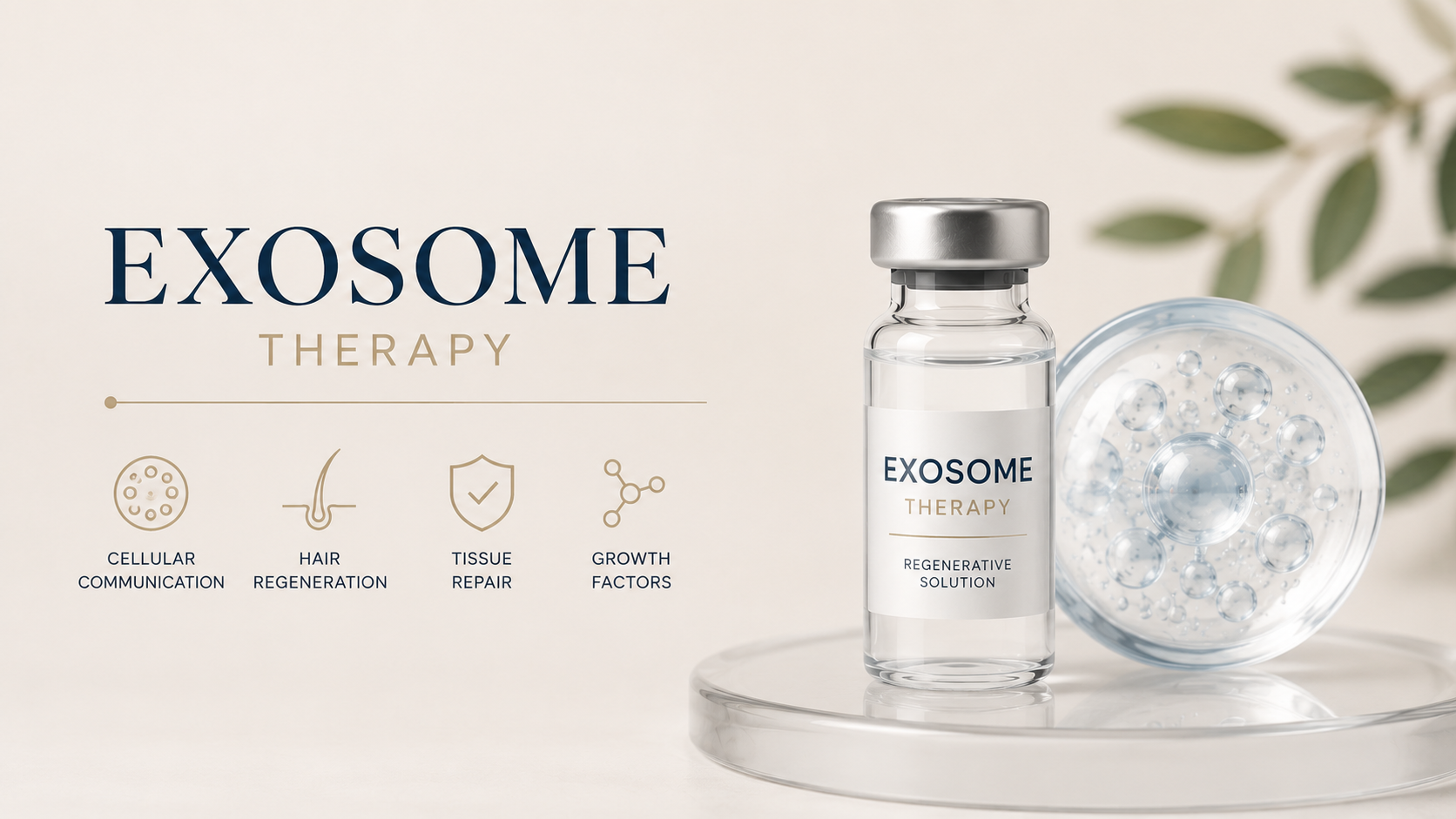
Potential Benefits of Exosome Therapy
- Rich in signaling molecules and growth factors
- May help reduce inflammation around hair follicles
- Supports tissue repair and regeneration
- Requires no blood draw from the patient
- Emerging option in regenerative aesthetics
Exosome Therapy vs PRP: Key Differences
Source
PRP is derived from the patient's own blood, while exosome therapy uses laboratory-prepared exosome products.
Mechanism of Action
PRP works primarily through concentrated platelets and growth factors. Exosomes function as cellular messengers that may influence communication between cells and promote regenerative processes.
Treatment Procedure
PRP requires a blood draw, processing, and injection. Exosome therapy generally does not require blood collection and focuses on delivering exosome-rich products directly to the scalp.
Scientific Evidence
PRP has been studied for a longer period and currently has more clinical evidence supporting its use for certain types of hair loss. Exosome therapy is a newer treatment, and while early findings are promising, additional research is needed to establish its long-term effectiveness and safety.
Which Treatment Produces Better Results?
There is currently no universal answer to this question. Treatment outcomes depend on several factors, including:
- The cause of hair loss
- The stage of hair thinning
- Age and overall health
- Treatment frequency
- Individual biological response
Some patients may experience noticeable improvement with PRP alone, while others may benefit from newer regenerative approaches such as exosome therapy. In certain clinics, these treatments may even be combined as part of a personalized treatment plan.
Who May Be a Good Candidate?
PRP and exosome therapy may be considered for individuals who:
- Have early to moderate hair thinning
- Are experiencing androgenetic alopecia
- Want to avoid surgery
- Seek minimally invasive hair restoration options
However, a thorough consultation with a qualified healthcare professional is essential before selecting any treatment.
Are There Any Risks?
Both treatments are generally considered minimally invasive. Temporary redness, swelling, tenderness, or mild discomfort at the injection site may occur.
Because exosome therapy is relatively new, ongoing research continues to evaluate its long-term safety profile and optimal treatment protocols.
Final Thoughts
PRP and exosome therapy represent two of the most talked-about regenerative treatments for hair loss. PRP has a longer clinical track record and utilizes the body's own growth factors, while exosome therapy offers an innovative approach based on cellular communication and tissue regeneration. Although both treatments show potential for improving hair growth and density, the most suitable option depends on individual goals, medical history, and professional evaluation.
Frequently Asked Questions (FAQ)
No. PRP may help slow hair loss and improve hair growth, but maintenance sessions are often required to sustain results.
Many treatment plans involve an initial series of sessions followed by periodic maintenance treatments, depending on the patient's response.
Some practitioners combine regenerative treatments as part of a customized hair restoration strategy, although protocols may vary.
Visible improvements may take several months, as hair growth occurs gradually and varies from person to person


