

Published on 7 June 2026
Preventive Botox: Benefits and Risks
Fact checked
Preventive Botox: Benefits and Risks
Botox has long been one of the most popular non-surgical cosmetic treatments for reducing facial wrinkles. In recent years, a growing number of younger adults have begun using Botox before noticeable wrinkles develop—a practice commonly known as preventive Botox.
Supporters of preventive Botox believe that treating facial muscles early may help delay the formation of dynamic wrinkles, while critics question whether starting treatment at a young age is always necessary. Understanding the potential benefits, limitations, and risks of preventive Botox can help individuals make informed decisions about their aesthetic goals.
What Is Preventive Botox?
Preventive Botox refers to the use of botulinum toxin injections before wrinkles become deeply visible or permanently etched into the skin.
Facial expressions such as smiling, frowning, squinting, and raising the eyebrows cause repeated muscle contractions over time. These repetitive movements can eventually lead to dynamic wrinkles, which may later develop into static wrinkles that remain visible even when the face is at rest.
Preventive Botox aims to reduce the strength of these muscle contractions before permanent lines become established.
How Does Preventive Botox Work?
Botox temporarily relaxes targeted facial muscles by blocking nerve signals responsible for muscle movement.
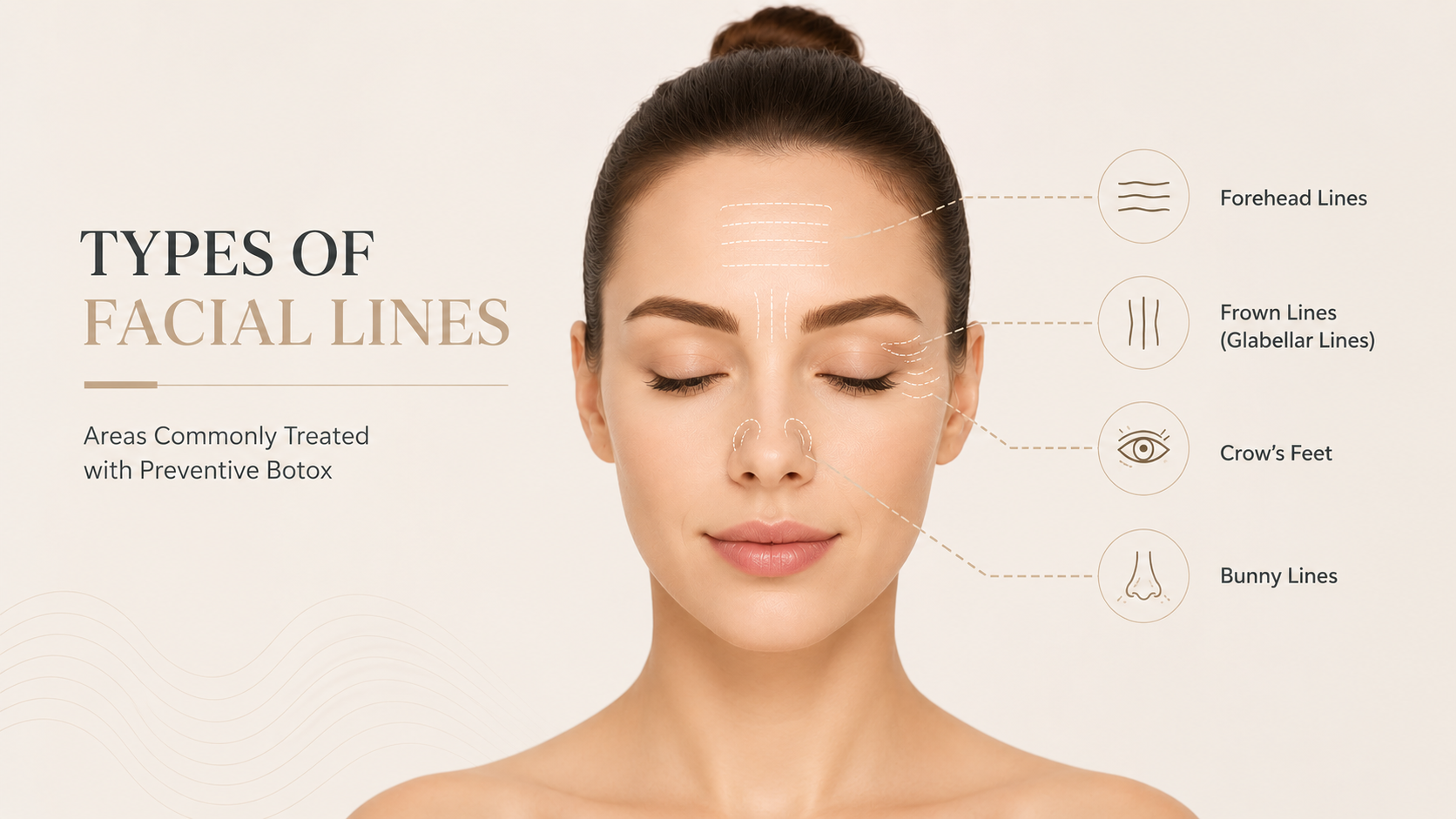
When used preventively, smaller doses are typically injected into areas prone to wrinkle formation, including:
- Forehead lines
- Frown lines between the eyebrows
- Crow’s feet around the eyes
- Bunny lines on the nose
By reducing repetitive muscle activity, preventive Botox may help slow the development of visible wrinkles.
Potential Benefits of Preventive Botox
Delayed Formation of Wrinkles
One of the primary goals of preventive Botox is reducing the repetitive muscle movements that contribute to wrinkle formation over time.
Smoother Skin Appearance
Many patients notice smoother skin and softer facial lines, even before significant wrinkles appear.
Less Aggressive Treatments Later
Some experts believe that early intervention may reduce the need for stronger treatments in the future, although individual results vary.
Increased Confidence
Preventive Botox may help individuals maintain a youthful appearance and feel more confident about their skin.
Who Is a Good Candidate for Preventive Botox?
Preventive Botox is not necessary for everyone. Candidates may include:
- Individuals in their mid-to-late twenties or thirties
- People with strong facial muscle movement
- Those beginning to notice fine expression lines
- Individuals with a family history of early wrinkle formation
The ideal treatment plan depends on factors such as skin quality, genetics, lifestyle, and sun exposure.
Potential Risks and Limitations
Temporary Side Effects
Common side effects may include:
- Mild redness
- Swelling
- Bruising
- Tenderness at the injection site
These effects are typically temporary and resolve within a few days.
Unnatural Facial Expression
Excessive treatment or improper injection techniques may result in reduced facial expressiveness or an unnatural appearance.
Cost of Long-Term Maintenance
Because Botox effects are temporary, maintenance treatments are usually required every few months to maintain results.
Not a Complete Anti-Aging Solution
Botox targets muscle-related wrinkles but does not address skin texture, pigmentation issues, volume loss, or other signs of aging.
At What Age Should Preventive Botox Start?
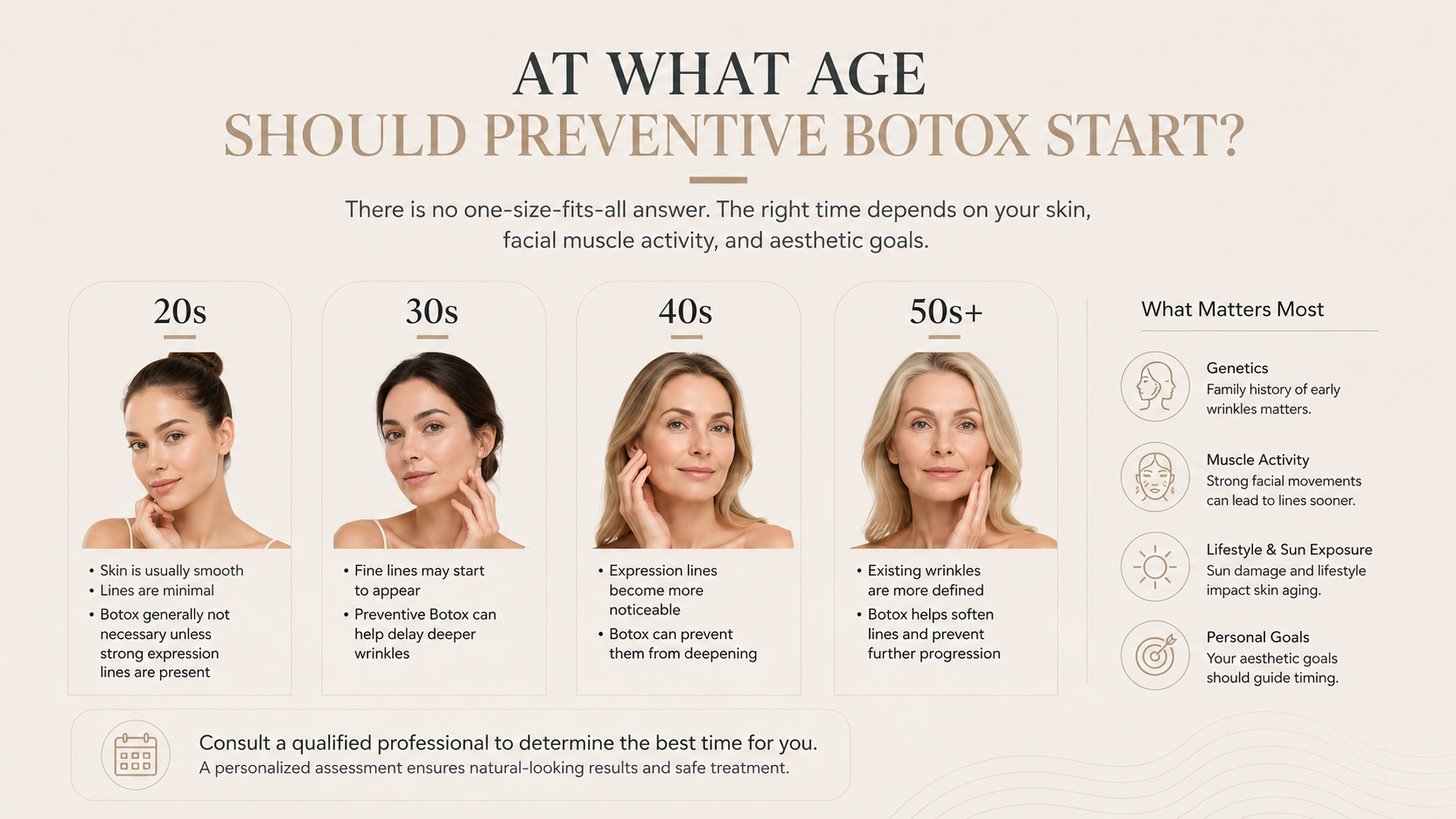
There is no universally recommended age for preventive Botox.
For some individuals, early expression lines may appear in their twenties, while others may not notice visible wrinkles until much later. Rather than focusing on age alone, many experts recommend evaluating skin condition, facial muscle activity, and aesthetic goals.
A consultation with a qualified healthcare professional can help determine whether preventive Botox is appropriate.
Alternatives to Preventive Botox
Individuals interested in preventing signs of aging may also consider:
- Daily sunscreen use
- Retinoids and retinol products
- Medical-grade skincare
- Chemical peels
- Microneedling
- Laser skin rejuvenation
- Healthy lifestyle habits
These approaches can complement or, in some cases, reduce the need for injectable treatments.
Final Thoughts
Preventive Botox has become increasingly popular among younger adults seeking to delay visible signs of aging. By reducing repetitive muscle movements, it may help slow the development of facial wrinkles and maintain smoother skin over time. However, it is not a one-size-fits-all solution, and the decision to start treatment should be based on individual needs, expectations, and professional medical advice.


